Laparoscopic & Minimally Invasive Surgery
Best Piles Surgeon in Delhi: Why Patients Choose Dr. Ashish Vashistha
Piles are common enough that most people know someone who has had them, yet uncommon enough as a topic of conversation that many patients wait months, sometimes years, before consulting a piles specialist. The discomfort gets managed quietly with creams and dietary changes until bleeding or pain forces the issue.
If you are looking for a piles surgeon in Delhi, this guide covers what piles actually are, how severity is graded, which treatment options exist at each stage, and why Dr. Ashish Vashistha, a laparoscopic piles surgeon based in South Delhi with 28+ years of surgical experience, is a name patients researching piles treatment in the city come across often.
What Are Piles, and Why Grading Matters
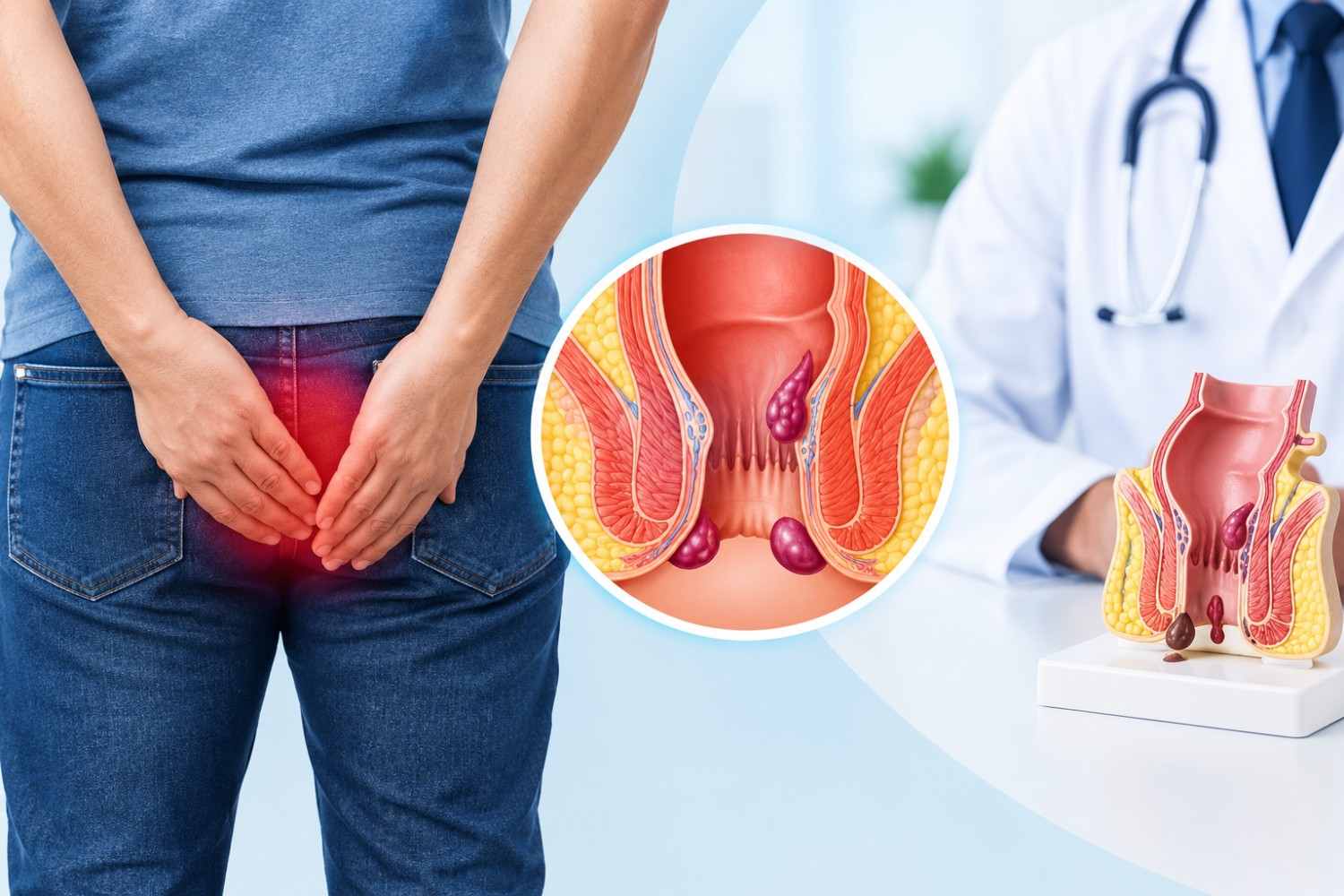
Piles, medically known as hemorrhoids, are swollen veins in the lower rectum and anus. Internal hemorrhoids form inside the rectum and are usually painless, though they can cause bleeding or push through the anal opening during a bowel movement. External hemorrhoids develop under the skin around the anus and tend to cause more itching, pain, and swelling. A thrombosed hemorrhoid, where a blood clot forms inside an external hemorrhoid, can cause sudden, severe pain and a hard lump.
Doctors grade internal hemorrhoids on a scale of I to IV based on severity, and this grading is what actually determines treatment, not just the presence of symptoms.
Clinical Overview
Understanding Piles: Types, Grading & Treatment Criteria
Treatment decisions are guided strictly by precise grading and whether the condition responds to conservative measures or requires advanced intervention.
Types of Hemorrhoids
Internal Hemorrhoids: Form inside the rectum and are usually painless, though they can cause bleeding or push through the anal opening during a bowel movement.
External & Thrombosed: Develop under the skin around the anus causing itching and swelling. When a blood clot forms (thrombosed hemorrhoid), it causes sudden, severe pain and a hard lump.
Key Highlights:- Internal piles form above the dentate line and rarely hurt
- External piles are sensitive to touch, sitting, and pressure
- Thrombosed piles produce acute pain requiring urgent relief
- Proper clinical examination prevents misdiagnosis
Hemorrhoid Grading (Scale I - IV)
Doctors grade internal hemorrhoids on a scale of I to IV based on severity, and this grading is what actually determines treatment, not just the presence of symptoms:
- Grade I: Small, internal, no prolapse; usually managed with diet and lifestyle changes.
- Grade II: Prolapse during straining but return on their own afterward.
- Grade III: Prolapse and require manual pushing back into place.
- Grade IV: Permanently prolapsed and cannot be pushed back in; usually needs surgical treatment.
Conservative vs. Surgical Path
Lifestyle & Medical Management: Not every case of piles needs an operation. Grade I and many Grade II cases typically respond to increased fibre intake, more fluids, stool softeners, and topical treatments.
When Surgery Is Needed: Surgery becomes the more reliable option once piles reach Grade III or IV, stop responding to conservative treatment, or cause recurring bleeding and discomfort that affects daily life.
Clinical Decision Points:- Non-surgical treatments prioritized for early grades
- Surgical evaluation for persistent bleeding or prolapse
- Customized approaches based on patient health and history
Specialist Profile
Meet Dr. Ashish Vashistha: A Leading Piles Surgeon in South Delhi
Dr. Ashish Vashistha is a General, Gastrointestinal, Bariatric, Metabolic, Hernia and Robotic Surgeon with 28+ years of experience in advanced surgical practice. He currently serves as Principal Director and Head of the Department of General Surgery & Robotics at Max Super Speciality Hospital, Saket, in South Delhi, where piles surgery is performed using laparoscopic and minimally invasive techniques alongside the practice's broader general surgery work.
His approach to piles treatment is built on grading severity accurately before recommending a path forward, rather than moving straight to surgery for every patient who walks in with symptoms.
Experience:
28+ years across general and laparoscopic surgery, including anorectal conditions.
Location:
Max Super Speciality Hospital, Saket, South Delhi, serving patients across South Delhi and the wider NCR.
Fellowship Training:
FIAGES and FNBE-MAS in minimal access surgery.
Related Expertise:
Treats fissure, fistula-in-ano and pilonidal sinus, conditions that frequently overlap with or are mistaken for piles.
What Makes Dr. Vashistha One of the Best Piles Surgeons in Delhi
Patients researching the best piles surgery in Delhi are typically weighing the same handful of factors: whether the surgeon grades severity accurately before recommending surgery, whether non-surgical options are offered when appropriate, and how clearly the recovery process is explained beforehand.
Accurate Grading
Treatment recommendations are based on hemorrhoid grade and symptoms, not a default surgical pathway.
Minimally Invasive Expertise
28+ years of laparoscopic and minimal access surgical experience for smooth recovery.
Hospital Infrastructure
Based at Max Super Speciality Hospital, Saket, a full-service tertiary care hospital in South Delhi.
Related Anorectal Expertise
Also treats fissure, fistula-in-ano and pilonidal sinus, useful when symptoms overlap or diagnosis isn't straightforward.
Conservative Care
Piles Treatment Options: From Lifestyle Changes to Surgery
Not every case of piles needs an operation. Grade I and many Grade II cases typically respond to increased fibre intake, more fluids, stool softeners, and topical treatments.
Surgery becomes the more reliable option once piles reach Grade III or IV, stop responding to conservative treatment, or cause recurring bleeding and discomfort that affects daily life.
Surgical Care
Laparoscopic and Surgical Piles Treatment in Delhi
As a laparoscopic piles surgeon in Delhi, Dr. Vashistha offers minimally invasive surgical treatment for higher-grade piles. The right procedure depends on the grade, whether the hemorrhoids are internal, external, or mixed, and the patient's overall health.
Stapled and minimally invasive approaches generally offer a shorter recovery and less discomfort than traditional open hemorrhoidectomy, though for certain Grade IV or complex mixed cases, open surgery remains the more definitive option.
Piles Treatment Procedures: Comparison & Recovery
A side-by-side comparison of recovery timelines and clinical indications across procedures.
| Procedure | Typical Recovery | Best Suited For |
|---|---|---|
| Rubber Band Ligation | Few days | Grade I-II, done without surgery in-office |
| Stapled Hemorrhoidopexy | 1-2 weeks | Grade II-III with less post-operative pain than open surgery |
| Open Hemorrhoidectomy | 2-4 weeks | Grade III-IV or mixed internal-external piles |
Warning Signs
Signs You Need to See a Piles Specialist
Consult a specialist promptly if you encounter any of the following symptoms:
- Bright red bleeding during or after a bowel movement
- A lump or swelling around the anus that doesn't go away
- Itching, irritation or discomfort in the anal area
- Pain that worsens with sitting, especially with a thrombosed hemorrhoid
- A sensation of incomplete bowel emptying
Important Medical Notice: Bleeding should never be assumed to be piles without an examination. Rectal bleeding can also signal other conditions, including anal fissures or, less commonly, colorectal cancer, which is why a proper evaluation matters more than self-diagnosis based on symptoms alone. Seek urgent care if bleeding is heavy or comes with dizziness or lightheadedness.
Informed Decision Making
Choosing the Right Piles Surgeon: Questions to Ask
A detailed consultation ensures that you understand your diagnosis and have clarity on the recommended treatment path:
- 1. Grade Assessment: What grade are my piles, and does that change the recommended treatment?
- 2. Treatment Necessity: Do I actually need surgery, or would conservative treatment work first?
- 3. Surgical Choice: Which surgical option do you recommend for my case, and why?
- 4. Recovery & Pain: What is the expected recovery time and pain level after the procedure?
- 5. Recurrence Prevention: What can I do afterward to reduce the chance of recurrence?
Dr. Ashish Vashistha conducts comprehensive pre-operative evaluations at Max Super Speciality Hospital, Saket, ensuring every patient understands their diagnosis and procedure before proceeding.
Post-Operative Journey
Recovery After Piles Surgery
Modern minimally invasive techniques allow for manageable healing and a smooth return to daily routines.
First Few Days
Discomfort during bowel movements is common and managed with prescribed pain relief and stool softeners.
First Week
A high-fibre diet and adequate fluid intake are important to avoid straining during healing.
1-2 Weeks
Most patients who had stapled or minimally invasive treatment return to normal daily activity.
2-4 Weeks
Patients who had open hemorrhoidectomy typically need this longer window before full recovery.
Frequently Asked Questions
Dr. Ashish Vashistha is a widely recognized laparoscopic piles surgeon in South Delhi, based at Max Super Speciality Hospital, Saket, with 28+ years of surgical experience treating piles and related anorectal conditions.
No. Grade I and many Grade II piles typically respond to dietary changes, increased fibre, and topical treatment. Surgery is generally recommended for Grade III-IV piles or cases that don't improve with conservative management.
Some discomfort during recovery, particularly with bowel movements, is normal. Stapled hemorrhoidopexy and other minimally invasive techniques generally cause less post-operative pain than traditional open hemorrhoidectomy.
Most patients recover within one to two weeks after stapled or minimally invasive treatment, compared with two to four weeks typically needed after open hemorrhoidectomy.
Recurrence is possible, particularly without dietary and lifestyle changes after treatment. Adequate fibre intake, hydration, and avoiding prolonged straining reduce the likelihood of piles returning.
Max Super Speciality Hospital, Basement OPD, Press Enclave Road, Saket, New Delhi - 110017, serving patients across South Delhi and the wider Delhi NCR.
If you have noticed bleeding, discomfort, or a lump that doesn't go away, book a consultation with Dr. Ashish Vashistha at Max Super Speciality Hospital, Saket, to get an accurate diagnosis and a treatment plan suited to your case.
Book a Consultation at Max Super Speciality Hospital, Saket